


The Creator of OpenClaw Just Joined OpenAI. This Is Why That Matters.
Peter Steinberger is an Austrian software engineer who spent 13 years building a company called PSPDFKit, a PDF toolkit used by developers worldwide, before selling it in 2024. Then, in November 2025, as a side project, he started exploring AI agents. What came out of that exploration was something called Clawdbot, then Moltbot (Anthropic’s lawyers had opinions about the first name), and finally OpenClaw.
In roughly three months, OpenClaw accumulated nearly 200,000 GitHub stars, spread virally across the developer community, attracted enough attention to get Baidu planning to integrate it directly into their flagship app for Chinese users, and made Steinberger one of the most sought-after people in AI.
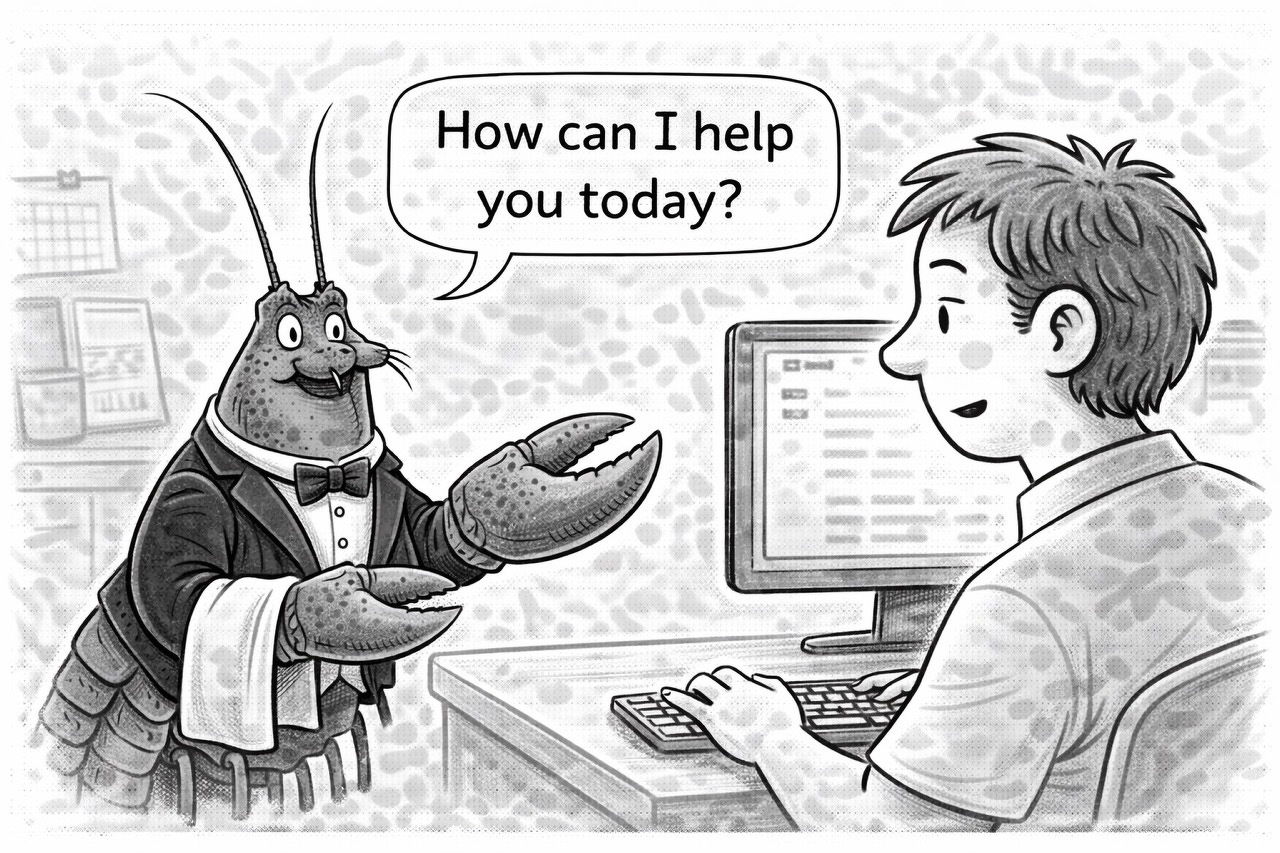
On 15 February 2026, Sam Altman announced that Steinberger was joining OpenAI to “drive the next generation of personal agents.” Two days after Reece and I had finished recording the episode of Prompt Fiction where we’d spent a good chunk of time talking about OpenClaw agents and what they can do.
Sources: TechCrunch (15 Feb 2026), CNBC (15 Feb 2026), Peter Steinberger’s own blog post (15 Feb 2026)
What OpenClaw Actually Is
Before we talk about why this matters, it’s worth being clear about what OpenClaw is, because it’s one of those things that sounds technical until you explain it properly.
A chatbot is like texting an expert. You send a question, they send an answer. An AI agent is like hiring an expert who can actually go and do things. OpenClaw lets anyone build a personal AI agent that runs on their own hardware, connects to messaging apps they already use like WhatsApp, Telegram or iMessage, and then gets to work. It can send emails, manage calendars, browse the web, handle files, run tasks on a schedule, and continue working even when you’re not at your computer. It remembers context across conversations so you never have to re-explain yourself.
That’s not a chatbot. That’s a digital worker.
What made OpenClaw remarkable wasn’t just what it could do. It was that it was open source, free, and could run on hardware you already own. Someone put it on a $25 prepaid phone from Walmart and gave it control of the phone’s camera, sensor array and calling functions. Your AI agent, on a throwaway handset, sitting on your shelf, watching the room. That’s where we are.
Source: OpenClaw documentation, GitHub / ClawPhone
Why Steinberger’s Decision Is Interesting
He had options. Multiple major AI labs were courting him. He spent time in San Francisco meeting with all of them. In his own blog post announcing the move, he was honest about why he chose OpenAI over going it alone.
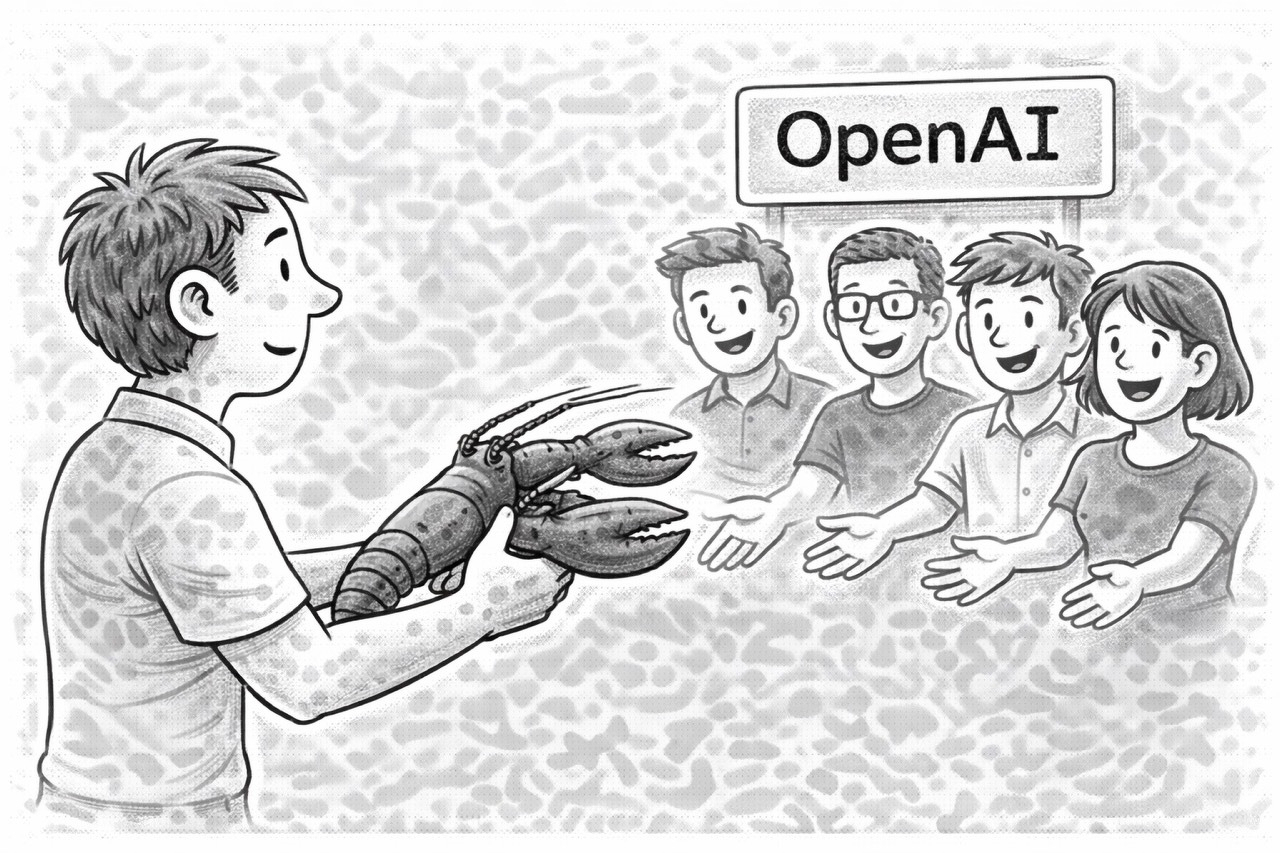
“I could totally see how OpenClaw could become a huge company,” he wrote. “But it’s not really exciting for me. I’m a builder at heart. I did the whole creating-a-company game already, poured 13 years of my life into it and learned a lot. What I want is to change the world, not build a large company, and teaming up with OpenAI is the fastest way to bring this to everyone.”
His stated mission: to build an agent that even his mum can use.
That framing matters. The most important thing about OpenClaw’s success wasn’t its technical capability, it was that ordinary people could see immediately what it was for. The agent that got itself a phone number and called its owner, the one that controlled a $25 camera phone, these aren’t abstract demonstrations. They’re glimpses of a specific future where AI doesn’t wait for you to open a browser tab. It’s just there, doing things, on your behalf, continuously.
Steinberger wants to make that accessible to everyone. OpenAI gave him the resources and the research infrastructure to try.
Source: InfoWorld on the hire (15 Feb 2026)
OpenClaw Isn’t Going Away
One of the first things people asked when the announcement landed was whether OpenAI was simply buying the project to quietly absorb or shut it down. That’s happened before in tech. You acquire the thing that threatens you, you wind it down gradually, and the threat disappears.
Altman was explicit that this isn’t what’s happening here. OpenClaw will move into an independent foundation and continue as an open-source project that OpenAI will support. The developer community that built around it, the security researchers improving it, the people building their own agents on top of it, they keep going. Steinberger will stay involved in guiding its direction.
That commitment matters both commercially and reputationally. The developer community that made OpenClaw viral would not respond well to a quiet shutdown, and OpenAI knows it. As Altman put it: “The future is going to be extremely multi-agent and it’s important to us to support open source as part of that.”
Sources: SiliconANGLE (15 Feb 2026), Silicon Republic (16 Feb 2026)
What This Signals for the Rest of Us
The competitive dynamic in AI right now is moving away from “whose model is smartest” toward “whose agents are most useful.” The race is shifting from raw intelligence to practical autonomy. Not which AI can write the best essay, but which AI can actually handle the work you don’t want to do, without you having to hold its hand through every step.
OpenClaw demonstrated that there is enormous appetite for exactly that. Nearly 200,000 GitHub stars don’t accumulate in weeks by accident. That number is developers saying: this is the thing I’ve been waiting for. This is what should exist.
OpenAI bringing Steinberger in house isn’t just a talent acquisition. It’s a signal about where the whole company is pointing. Altman said personal agents will “quickly become core to our product offerings.” That’s not distant future language. That’s this year.
At Techosaurus, we’ve been saying for some time that the future of AI adoption isn’t about which model people choose. It’s about whether people have the confidence and the frameworks to actually use these tools to do meaningful work. Agents are the version of that which does more of the work for you, which is either exciting or alarming depending on how prepared you feel.
My suggestion: start getting familiar with what agents can and can’t do now, before the mainstream version arrives. Because once Steinberger’s polished, consumer-ready version of this lands on the App Store, the question won’t be whether you want an AI agent. It’ll be whether you’ve thought enough about what you want it to do.
I discussed this topic on the latest episode of Prompt Fiction. Listen to Chapter 11, Part 2 here.
Scott Quilter | Co-Founder & Chief AI & Innovation Officer, Techosaurus LTD