


QuitGPT - I sat on this article for two months. Here's what changed.
I wrote a version of this piece in March and never published it. Why? The world was moving fast enough that anything I filed would have aged badly within a fortnight. That instinct turned out to be right. Because what’s happened since then is one of the stranger business stories of the year, and you’d miss the full picture reading the headlines as they arrive.
So here’s the whole arc, in one place.
The original story
If you weren’t following closely in late February: OpenAI agreed to deploy its models on the Pentagon’s classified network. Anthropic refused a similar arrangement, citing its own safety restrictions. Within 48 hours of losing that $200 million contract, Claude went from number 42 to number one on the US App Store, knocking ChatGPT off the top spot for the first time. The QuitGPT movement, which had already been building around OpenAI’s political donations and its involvement with US Immigration and Customs Enforcement, found its moment. Over 1.5 million people cancelled subscriptions or committed to leaving. ChatGPT uninstalls spiked 295% in a single day. Mark Ruffalo shared the campaign. A federal judge later called the Pentagon’s retaliation against Anthropic “Orwellian” and blocked it.
That’s the version most people got, and we have covered it in articles before this one if you want to know more (Claude Said No to the Pentagon and Meant It).
Here’s what happened next….
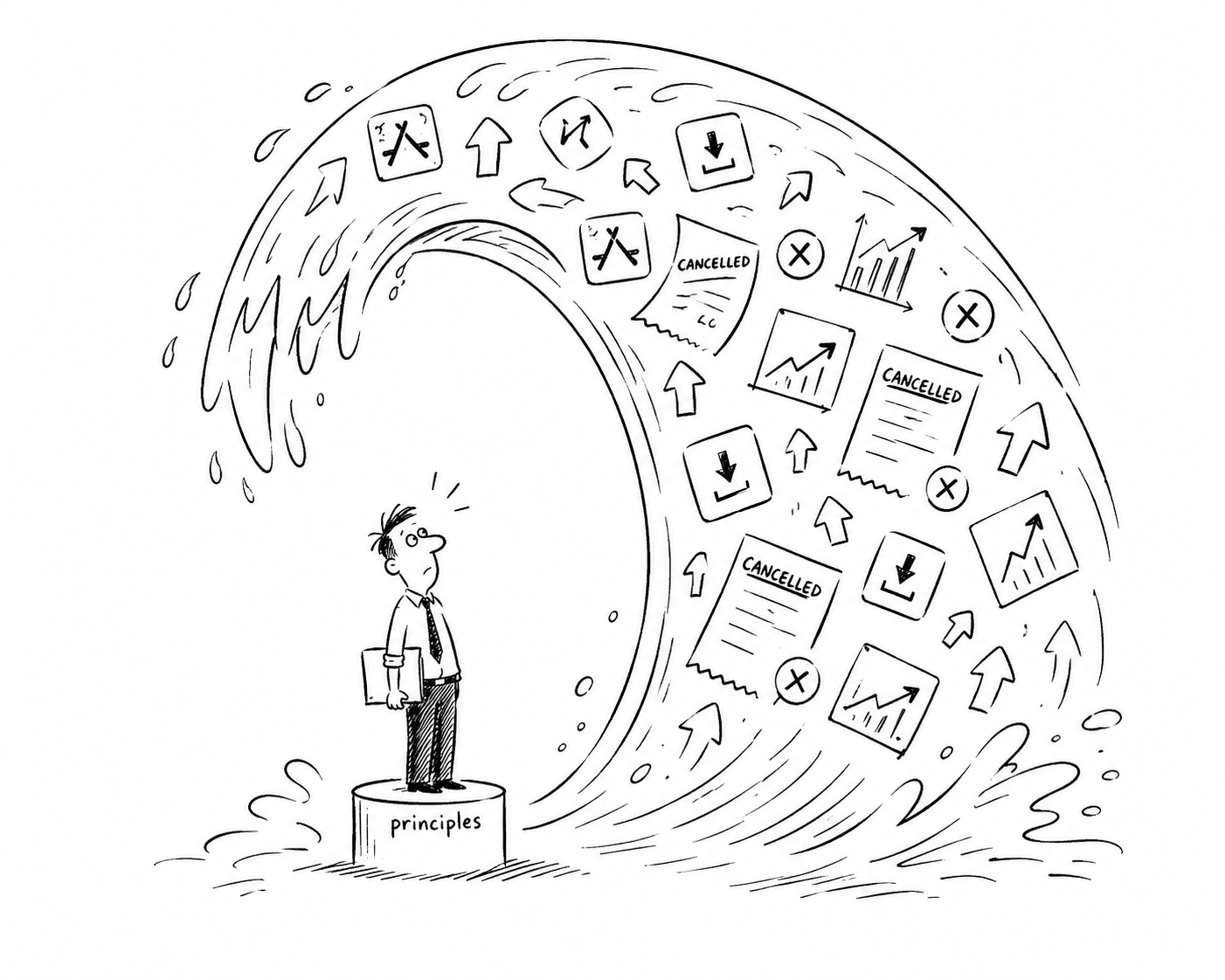
The numbers are genuinely difficult to process
Anthropic planned for 10x growth this year. They got 80x. Dario Amodei described Q1 2026 as “just crazy.” The revenue trajectory makes his “carzy” feel like an understatement: $87 million annualised run rate in January 2024, $1 billion by December 2024, $9 billion by end of 2025, $30 billion by April 2026. In February they closed a $30 billion Series G at a $380 billion valuation. They’re now reportedly in conversations about a $50 billion raise that would value them at over $900 billion, potentially leapfrogging OpenAI. An IPO is being explored for as early as October.
Claude Code, their agentic coding tool, hit $1 billion in annualised revenue within six months of public launch. One of the fastest product trajectories on record, by most measures.
Six months ago I could stand in front of 250 people, ask who’d heard of Claude, and see maybe 5 or 6 hands. The same question now gets most of the room. Whatever you make of the politics, that QuitGPT moment was extraordinary exposure. The kind you genuinely cannot buy.
What rapid scale actually looks like
The growth has consequences. Claude has had 138 incidents in the past 90 days, 42 of them major outages, with a median duration of over an hour. April 28 alone saw more than 5,000 users reporting problems in a single morning. April 13 took down both Claude.ai and Claude Code simultaneously.
In the March draft I called the early outages a “success tax,” a one-off growing pain you’d expect from a company suddenly flooded with users. That framing doesn’t hold up. This is ongoing, and if you’re running a business on Claude, that matters.
You’re renting someone else’s computer. The service can go down, and when it does, you typically get no warning and no SLA to hold them to. That’s true of every cloud tool, and most of the time it’s fine. At this frequency, though, it’s worth having a plan B.
The Claude Code incident
April made that point more sharply. On 21 April, Anthropic quietly removed Claude Code access from the £20-a-month Pro plan. No email, no changelog, nothing in the support docs. They just updated the pricing page. The backlash was significant enough that they reversed it within 24 hours, describing it as a “2% test of new prosumer signups.” Except the landing page and the documentation were also updated, which doesn’t add up for a 2% test.
The underlying story is simple enough: subscription plans don’t cover the actual token cost of what users consume, sometimes by a factor of ten. Claude Code is an expensive product to run. When you go from a manageable user base to 80x the revenue in a quarter, those economics become very pressured, very quickly. The reversal was the right call. The way it was handled was a useful reminder about how SaaS (Software as a Service) actually works: features can come and go without notice, and you’re always renting, not owning.
Anthropic are a business under real pressure.
QuitGPT: where things stand
The QuitGPT site now claims over 4 million people have taken some form of action. The original exodus of around 1.5 million in the days after the Pentagon announcement has continued to grow. In terms of where people went: Claude absorbed most of the visible movement, growing from around 8% to over 18% market share. Gemini picked up around 15%, largely through Google Workspace bundling. And DeepSeek went from near-zero to around 7% in under a year.
That last one deserves its own section, more on that later.
The deal with Elon Musk
On 6 May 2026, Anthropic announced they’d signed a deal with SpaceX to use all of the compute capacity at the Colossus 1 data centre in Memphis. 300 megawatts. 220,000 Nvidia GPUs. The reason is obvious: Anthropic’s infrastructure is straining under demand, and Colossus is one of the largest available compute resources in the world.

Here’s what Colossus actually is. Elon Musk’s AI company, xAI, built it and powered it using methane gas turbines, claiming they were temporary and needed no permit. The EPA ruled in January 2026 that large methane turbines require permits even for temporary operation. xAI’s response was to add six more turbines, bringing the total to 33. The NAACP filed a lawsuit in April. Earthjustice and the Southern Environmental Law Center are also involved. The potential annual emissions include 1,700 tons of nitrogen oxides, which would make Colossus the largest industrial source of NOx in the greater Memphis area. Memphis and the surrounding counties already carry an F grade for ozone pollution from the American Lung Association. The lawsuit also cites 180 tons of fine particulate matter and 19 tons of formaldehyde per year.
Three months before signing this deal, Musk had written publicly that Anthropic “hates Western Civilisation” and asked whether any company was “more hypocritical.” Fortune’s headline captures it cleanly: “Elon Musk called Anthropic ‘evil’ 3 months ago. Now he’s taking $4 billion to become its landlord."
One more detail worth knowing. The terms reportedly give SpaceX the right to reclaim the compute if Anthropic’s AI “engages in actions that harm humanity.” The definition of harm, presumably, belongs to Musk.
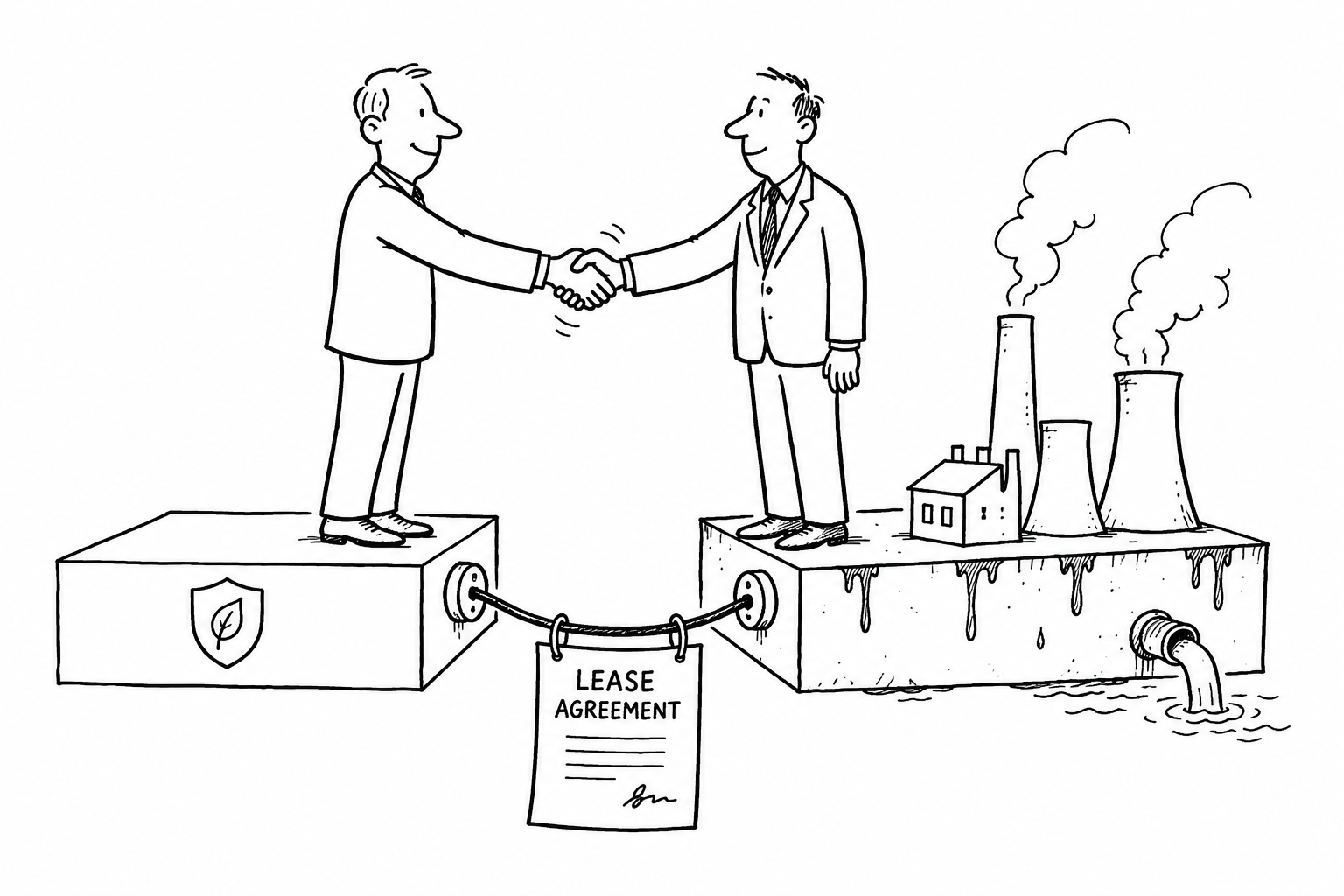
Where do I land on all this? About where I’ve always been on Anthropic. The Pentagon refusal was real, the court ruling backed it up, and the company’s principles have been tested under genuine pressure. Also real: signing a deal with a data centre running on unpermitted methane turbines in a community where air quality is already failing is a commercial decision that sits awkwardly alongside those principles. I said in March that Anthropic aren’t the squeaky clean heroes some people made them out to be. They still aren’t. Both things can be true at the same time, and you can decide how much weight to give each one.
The alternative nobody expected
The QuitGPT crowd mostly moved to Claude, but a quieter and arguably more interesting shift is happening around DeepSeek.
DeepSeek is a Chinese AI company. They released V3.2 under an MIT licence with full open weights on Hugging Face, meaning you can download it, run it locally on your own machine, and never send your data anywhere. The API pricing is around $0.14 per million input tokens, roughly 27 times cheaper than equivalent closed Western models. Their V4 model, launched in April 2026, was built specifically to run on Huawei’s Ascend chips rather than Nvidia hardware, a deliberate move to decouple Chinese AI from American chip dependency. Jensen Huang called it “a horrible outcome” for the United States.
The Chinese provenance gives some people pause, and that’s fair. The US government has made IP theft allegations. The data centres are in China. These aren’t small caveats, and if data sovereignty matters to your business, they affect how you approach the tool.
But I’d push back on the instinct to dismiss DeepSeek simply because of where it’s from. China tends to do what it has often done: observe what the rest of the world has built, apply serious engineering discipline, and make it dramatically cheaper and more accessible. The question of whether Chinese technology is inherently suspect because it comes from China is one that deserves more careful thought than a reflex no. We don’t apply the same logic to Chinese EVs, which are now competing and winning globally on performance and price. The human race tends to make better progress when it treats good ideas as good ideas regardless of their location. I’m not saying ignore the data risks. I’m saying the “China equals enemy, therefore disqualified” framing misses something worth thinking about.
Local AI running on your own hardware, under a genuinely open licence, at a fraction of the cost of Western cloud providers, is a real option that now exists. That matters for how businesses think about AI cost, data privacy, and what happens when the tool you rely on removes a feature without telling you - and I am confident that over the next 6-12 months we will see so much more of this, with companies having their own in-house AI, that they manage, they update, they backup, and have no dependancy on outside servers or services.
The full picture
The arc of this story, from the Pentagon refusal to the App Store charts to the outage logs to the Musk lease, is a business story, not a clean hero narrative. Companies make principled calls and commercial calls, often in the same week. The tools you use will change their features, their pricing, their infrastructure partners, and their terms. Sometimes they’ll tell you in advance.
The useful habit is reading the full picture, not just the headline that arrives today. The AI industry will hand you a new story every fortnight. Most of them are true. Very few of them are the whole story.
Scott Quilter | Co-Founder & Chief AI & Innovation Officer, Techosaurus LTD