


Meta glasses (and other smart glasses) - more than just the “latest trend”
Last week, whilst lying on a sun lounger in Menorca, I started writing about Meta glasses. It had been sitting in my head for a while because I’d watched the conversation around them become louder, angrier and increasingly detached from what the products actually do.
I shared the article on LinkedIn first because that’s where people can respond properly. They can challenge the argument, share their own experiences, disagree with me and add perspectives I hadn’t considered. For a subject that sits somewhere between privacy, accessibility, personal responsibility and public trust, that felt more useful than publishing it quietly on my own website and hoping people found it.
The response rather took off, and the comments became a useful extension of the article.
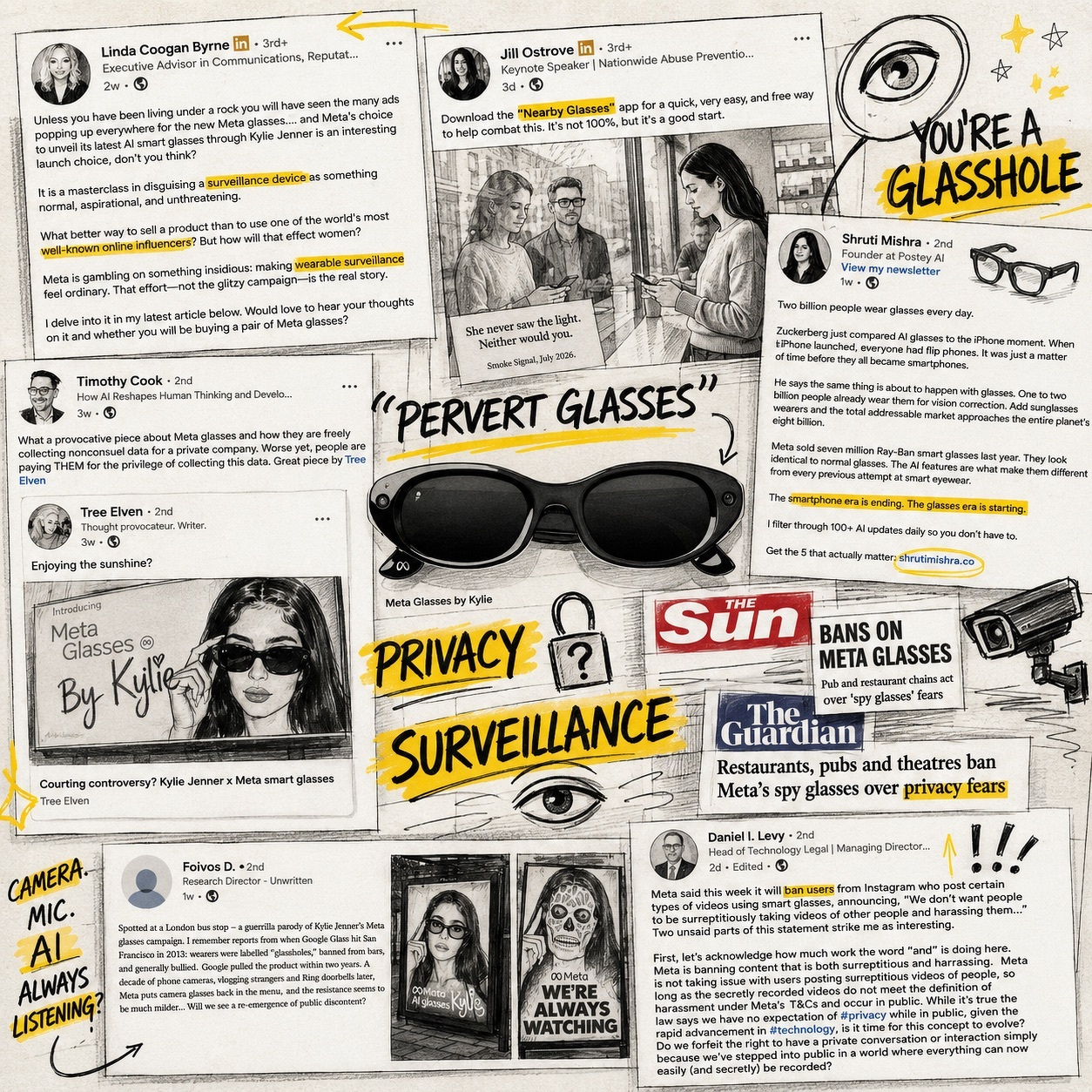
Some people felt that wearing recording-capable glasses in public was unethical in itself. Others shared examples of blind and disabled people using the same technology to make calls, read menus, navigate unfamiliar spaces and operate independently without needing to hold a phone. A number of people said their distrust was aimed almost entirely at Meta, while others pointed out that Samsung, Google, Apple and plenty of smaller manufacturers are moving towards the same category.
There were people who wanted blanket restrictions, people who wanted targeted rules, people who believed the wearer should be trusted and others who felt the people around them were being asked to carry a risk they hadn’t chosen.
The opinions swung a long way in both directions, but one common thread ran through almost all of them: trust.
And since I originally published this, things have moved again.
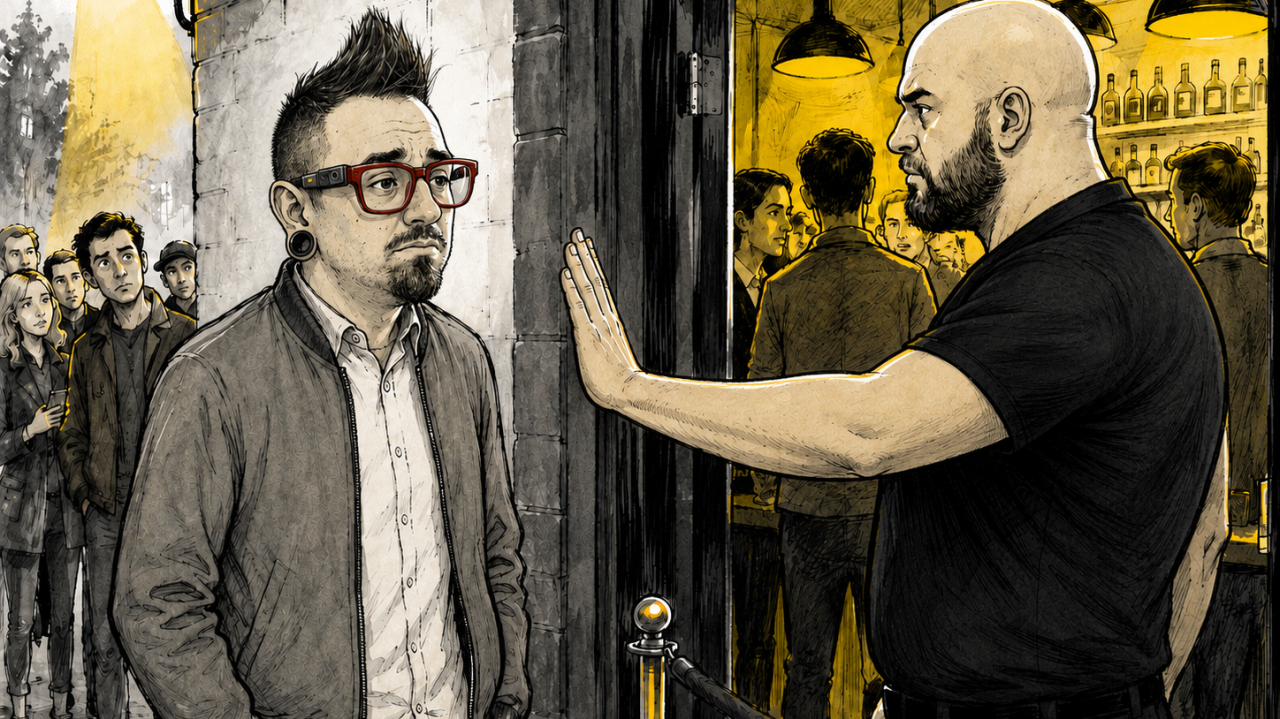
A wave of stories appeared saying that restaurants, pubs, members' clubs and theatres across the UK were now “banning Meta glasses”. Peel that back a little and the individual positions are more nuanced. Jeremy King has taken a strong stance around privacy in his restaurants. Soho House already prohibits filming in its clubs, so the glasses fall under that rule. ATG Theatres already prohibits filming during performances and says people wearing the glasses will be asked to remove them during a show. Wetherspoons' position is based on its existing rule that customers and staff shouldn’t be filmed without permission, with Tim Martin saying their instinct is to tell people to turn the cameras off.
Those distinctions matter because there is a difference between banning a particular piece of technology and applying an existing rule about recording to another camera that happens to sit on your face. A phone, camera, wearable, pen or anything else capable of recording can create the same problem if somebody decides to use it in a place where filming isn’t appropriate.
The headlines rarely leave much room for that distinction.
I was also contacted by Channel 4 News after they read the original article and asked whether I would be interested in contributing to a report they were preparing. We weren’t able to make the filming work in the end, but their finished piece, “Backlash grows over Meta glasses amid fears over secret recording”, aired on 10 August.
It includes something I was particularly pleased to see: a visually impaired user explaining how the glasses allow him to experience the world, visit galleries and even run a marathon. It also acknowledges that people can make calls, listen to music and use the built-in AI, so there is some recognition of what exists beyond the camera.
Having watched it, though, I still came away feeling that most of the weight sits with covert recording, surveillance, fear and what somebody might do with the technology in future. I understand why. The story of a 17-year-old secretly filmed by a man who then used the footage to promote courses on approaching women is horrible, and the anger belongs there.
My concern is what happens when anger at that behaviour spreads to anybody wearing the same device.
This was one of the points I had wanted to make if I appeared in the report. What concerns me is the jump from “this technology can be abused” to “therefore nobody should be allowed to use it”. We’re already seeing people with absolutely no ill intent being challenged in public, shouted at in the street or made to feel uncomfortable simply for wearing something they bought for the benefits it could bring them.
Cameras have been misused for decades. Phones have been used for covert filming, stalking and harassment, and social media has been used to distribute the resulting content. Yet we don’t automatically look at everybody holding a phone and assume they’re about to secretly film us.
Smart glasses deserve additional consideration because the camera sits on someone’s face and removes some of the obvious physical cues associated with raising a phone. That deserves sensible safeguards, clear rules in sensitive places and a proper conversation about privacy. I just don’t want us to reach a point where wearing a camera makes somebody guilty by association.
And perhaps that’s why trust kept appearing throughout the discussion.
Trust in Meta and the other companies building these products. Trust in the person wearing them. Trust in the capture light, the software, the privacy settings and the rules surrounding where the glasses can be used. Trust that useful technology won’t be abused, and trust that society won’t respond to that abuse by removing something that genuinely helps people.
That discussion has sharpened some of my thinking, although the main body of the article below remains as I originally wrote it. The arguments still stand, and everything that’s happened since has given me even more reason to believe that this conversation needs room for the uncomfortable middle ground.
You can read the original LinkedIn article, see the full discussion and add your own view here:
Read and join the discussion on LinkedIn
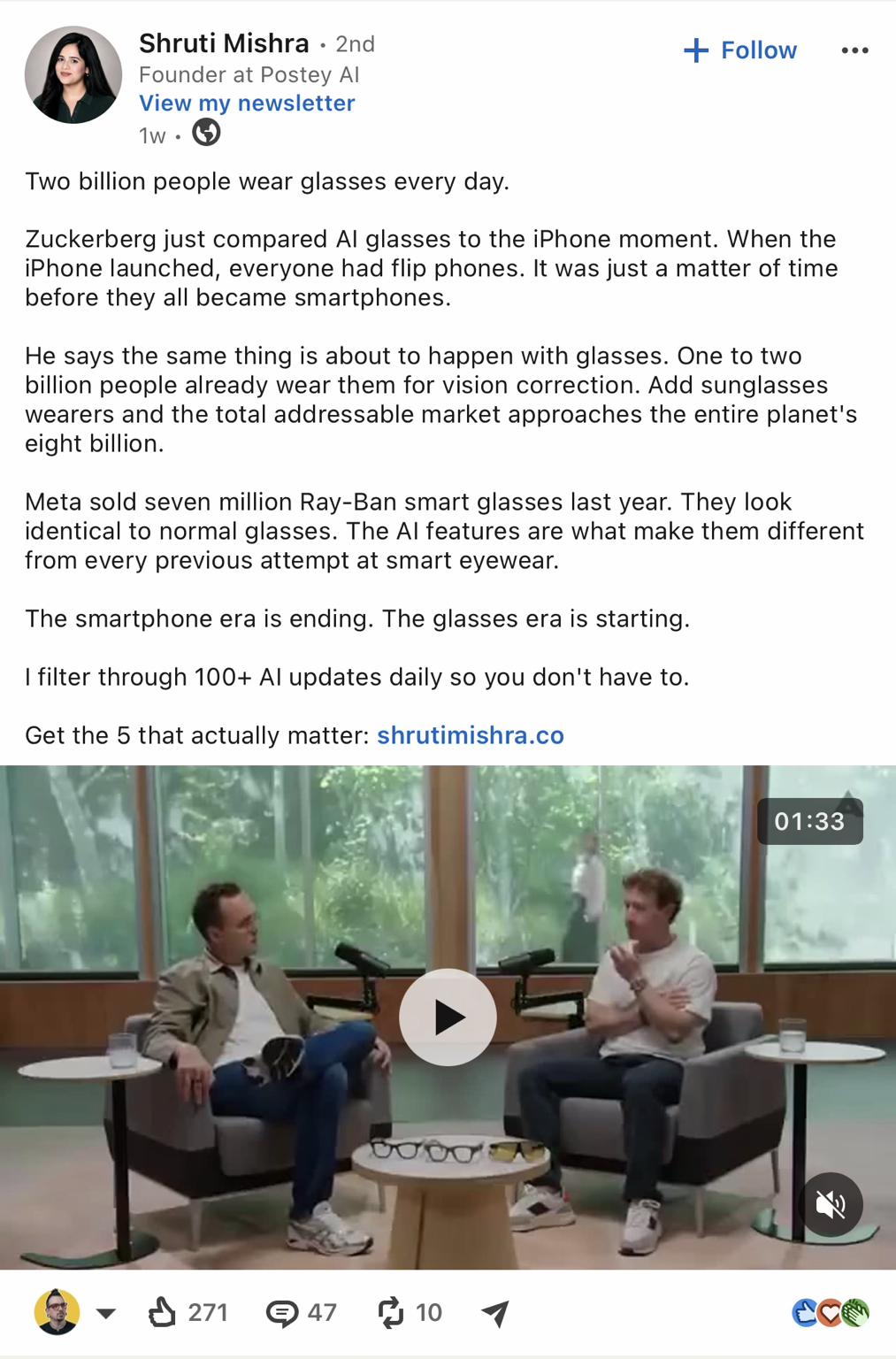
I’ve watched people share stories about Meta glasses with total confidence, while getting the basics wrong.
Some seem to believe the glasses film everything the wearer sees. Others assume every photo travels straight to Meta and lands in a corporate archive of unsuspecting strangers. Plenty of people think there’s no visible sign when recording happens.
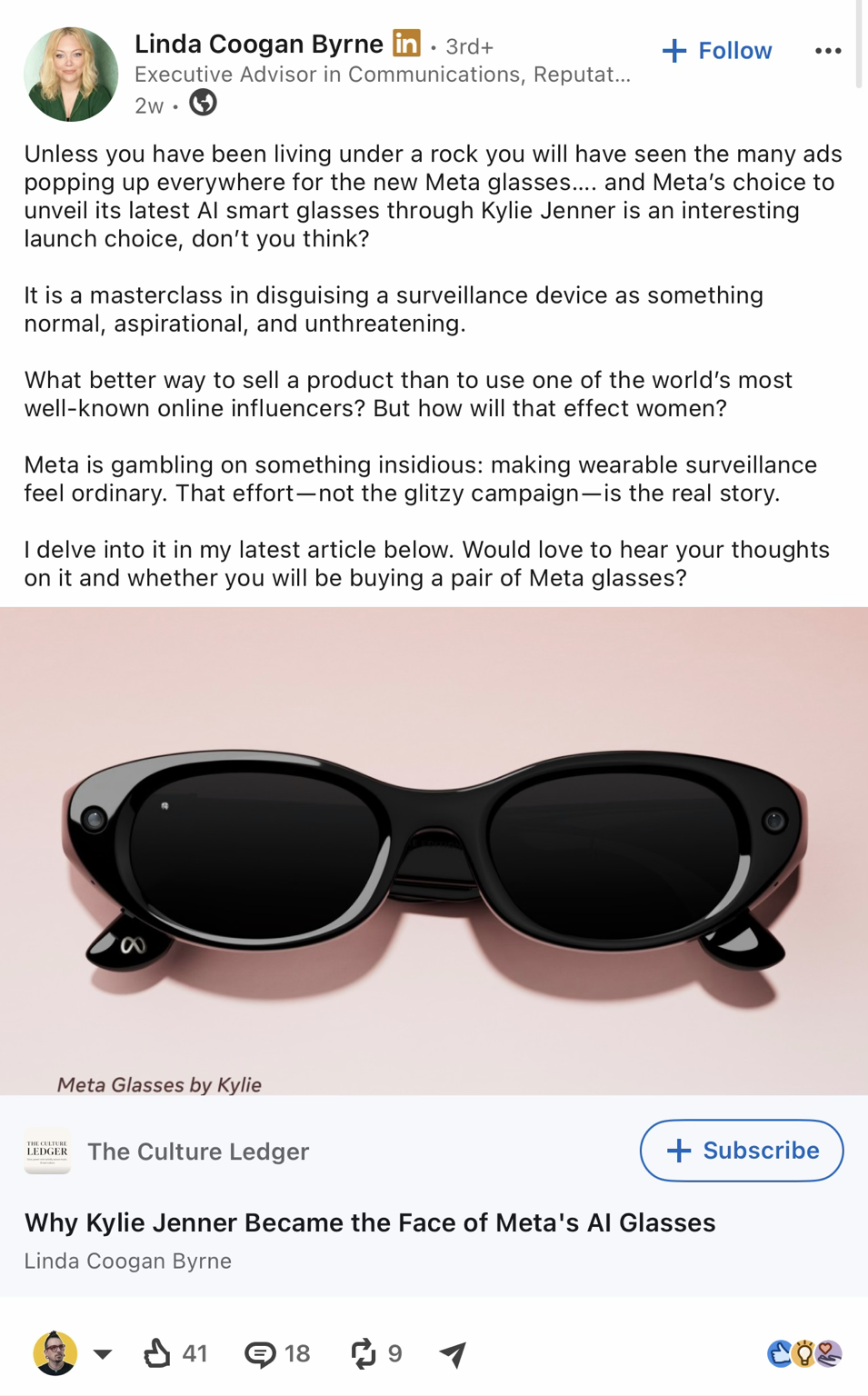
Yes, there are some real privacy problems, and I’ll get to the ones that deserve every bit of the anger… But let’s start with the legitimate scrutiny Meta has earned, which works better when it starts from an accurate description of the product.
First things first: The glasses don’t film continuously.
Capture takes a deliberate act: You hold the button or you use the voice command to start. Photos and videos sit on the glasses until you choose to import them, at which point they land in your phone’s gallery like anything shot on your phone camera, and you decide whether to share them, post them or hand them to Meta AI.
There’s a white capture LED on the front of the frames. It blinks for a photo and keeps blinking for the length of a video. Meta says it has no off switch, and from the second generation onwards, the camera disables itself if the light is covered. Today, people have gone past tape and started modifying or destroying the LED outright, which Joanna Stern traced to a small industry selling the service. On 7 July, Meta began pushing a mandatory update that disables the camera if it detects the LED has been physically tampered with or destroyed, alongside removing marketplace listings for tampering services and threatening legal action against the sellers.
Video recording runs to three minutes. That’s the ceiling on current models and you adjust it downwards in the app if you want shorter clips, whilst the original generation topped out at 30 seconds. Anyone planning a covert, hours-long documentary of your afternoon is going to spend that afternoon repeatedly starting new clips while watching the battery drain.
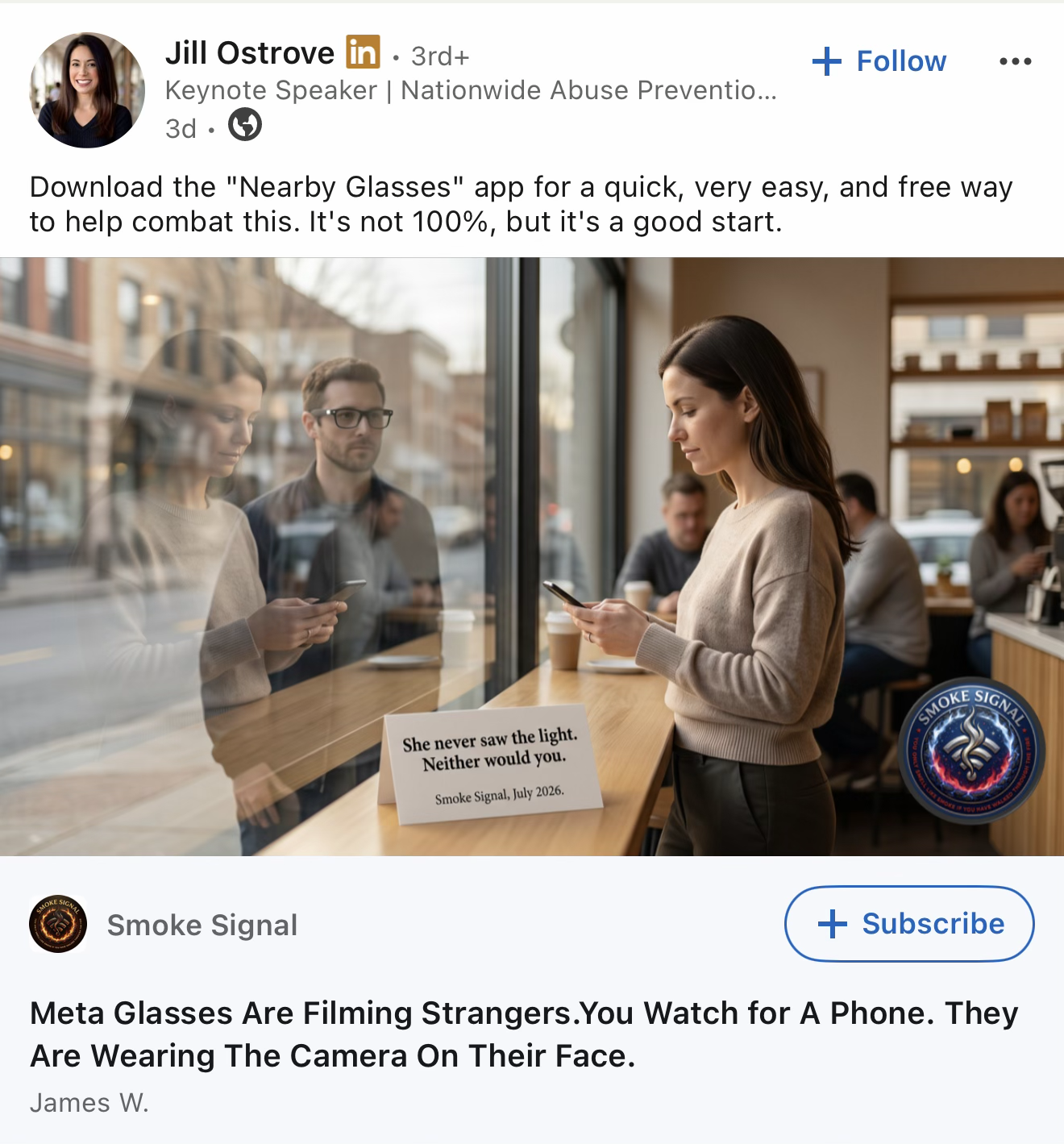
Can somebody still misuse them? Obviously. Somebody can modify a device, cover a light on older hardware, angle themselves carefully or find whichever gap the last update left open. People determined to behave badly are remarkably resourceful, and that resourcefulness turned up long before smart glasses. Phones record. GoPros record. Dashcams and body cameras record. Hidden cameras have been sold online for years inside pens, buttons, clocks, chargers and smoke alarms.
When I saw the claim that somebody had managed upskirting with smart glasses, my first thought was practical. How, with a camera mounted at eye level?
That question takes nothing away from the seriousness of it. Upskirting is invasive, degrading behaviour and the person on the receiving end deserves absolute support. It does show the shape of the gap, though. The offender arrived with the intent, went looking for an angle and picked a device. Take that product off the shelf and the intent survives, along with dozens of other cameras.
The responsibility sits with the individual who chose to do it.
What they’re actually for
I wear glasses all day. They aren’t an accessory I put on for effect. I need prescription lenses, and mine react to sunlight, so the same pair works indoors and out.
Smart glasses use space on my face that’s already occupied, which means they don’t compete for pocket space or add another screen to my life. They replace something I have to wear anyway with a version that does more.
The camera is part of that and it’s brilliant when used properly.
I can record a bike ride from my own eyeline. I can film a Segway run with both hands where they need to be. I can catch part of a trampoline park visit or a moment with the kids without stopping everything, digging out my phone, unlocking it and stepping outside the experience in order to document it.
Anybody who has tried to film an activity while taking part in it knows the difference. A phone makes you the camera operator. Glasses let you stay in the room. And that matters for family memories, because the person holding the camera is usually missing from the photograph, and the person filming an experience usually watches it through a rectangle.
Then there’s the audio. They work as open-ear Bluetooth headphones, so I can take a call, play a podcast or listen to music without plugging up my ears. The speakers aim sound at me and leave me aware of traffic, conversation and everything happening around me. Traditional headphones build a wall between you and the world, and everybody nearby has to work out whether you can hear them. Mine let the audio sit alongside the world. I can walk and listen, and still hear a bike coming up behind me.
And then there’s the AI - which is where they stop being clever and start being useful. I can ask where the nearest coffee shop is. I can stand in an aquarium, look at a fish and ask what it is. I can check when my mum’s coming over, send Ellie a message or settle a question without opening an app and falling into the gravity well of my phone.
That last part matters more than any single feature.
We’ve spent years talking about digital distraction while routing almost every digital interaction through a device that also contains email, social media, news, games, work and every other available interruption. You take your phone out to check one thing and 10 minutes later you’re reading an argument between two strangers under a video you never meant to watch.
The glasses let me ask the question, get the answer and carry on with my day. For all the accusations that they cut people off from the real world, mine have done the opposite. My phone stays in my pocket.
And my uses barely scratch the side of this that genuinely changes lives.
People who are blind or have low vision can use AI glasses to describe a room, read text and identify what’s in front of them. Meta’s work with Be My Eyes lets users start a hands-free video call with a trusted contact or a sighted volunteer who can explain what they’re looking at. Blind users have described reading menus, moving through airports and handling tasks that used to need several separate assistive devices. Meta has also announced programmes putting glasses and training into the hands of blind military veterans.
Live translation lets two people talk across a language barrier while still looking at each other. Hands-free control lets somebody with limited mobility take a photo, make a call or send a message without wrestling with a phone.
Where Meta earns the criticism
Now the part Meta deserves.
When you ask AI to do something, you create a different data flow from taking a photo for your own gallery. The service has to process your voice request, and when you ask about something you’re looking at, it may need to process an image of that scene. What happens next is the story.
In February, Svenska Dagbladet and Göteborgs-Posten published a joint investigation into Sama, a Nairobi outsourcing firm doing data annotation for Meta. Workers there described labelling footage and audio captured through the glasses, including people using the toilet, people undressing, credit card numbers and explicit sexual content. Meta says the data is filtered first and faces are blurred before it reaches annotators. The workers said the blurring failed regularly, particularly in low light and a former Meta employee backed them up. The UK’s Information Commissioner’s Office has written to Meta about it and a class action has been filed.
One of those accounts described a man’s wife undressing in their bedroom after he left the glasses on a table. I must be precise about this one, because it gets used as proof the hardware spies on you. And it doesn’t. Capture is a deliberate act, so somebody started a recording and walked away from a running device. That’s human error.
The pipeline is the scandal. Once content reaches Meta AI, a person in another country may watch it, and a company promising to blur faces first should be able to demonstrate that the blurring works. That requires plain language from Meta, controls people can actually find, and enough understanding from the wearer to know how and when to keep the AI out of it.
I wouldn’t use visual AI in a changing room, a medical appointment, a bedroom or a confidential meeting. I wouldn’t point it at somebody else’s documents or ask it to analyse a person who hadn’t agreed to it. Those lines feel obvious to me, though human history suggests obvious things still need writing down.
The public conversation keeps collapsing several different activities into one enormous word called surveillance. Taking a photo for your private gallery, filming a family day out, livestreaming to social media, asking AI about a scene and secretly filming a stranger for monetised content all involve the same camera. It’s the intention, the processing and the consequences which are miles apart, and we need language that can hold the difference.
A kitchen contains knives because knives are useful. We still distinguish between chopping an onion, and carrying a blade into a workplace and holding one to somebody’s throat. The object has capabilities and the setting changes the risk, it is the person decides what happens. Technology regulation needs that same maturity and understanding.
This conversation is already bigger than Meta
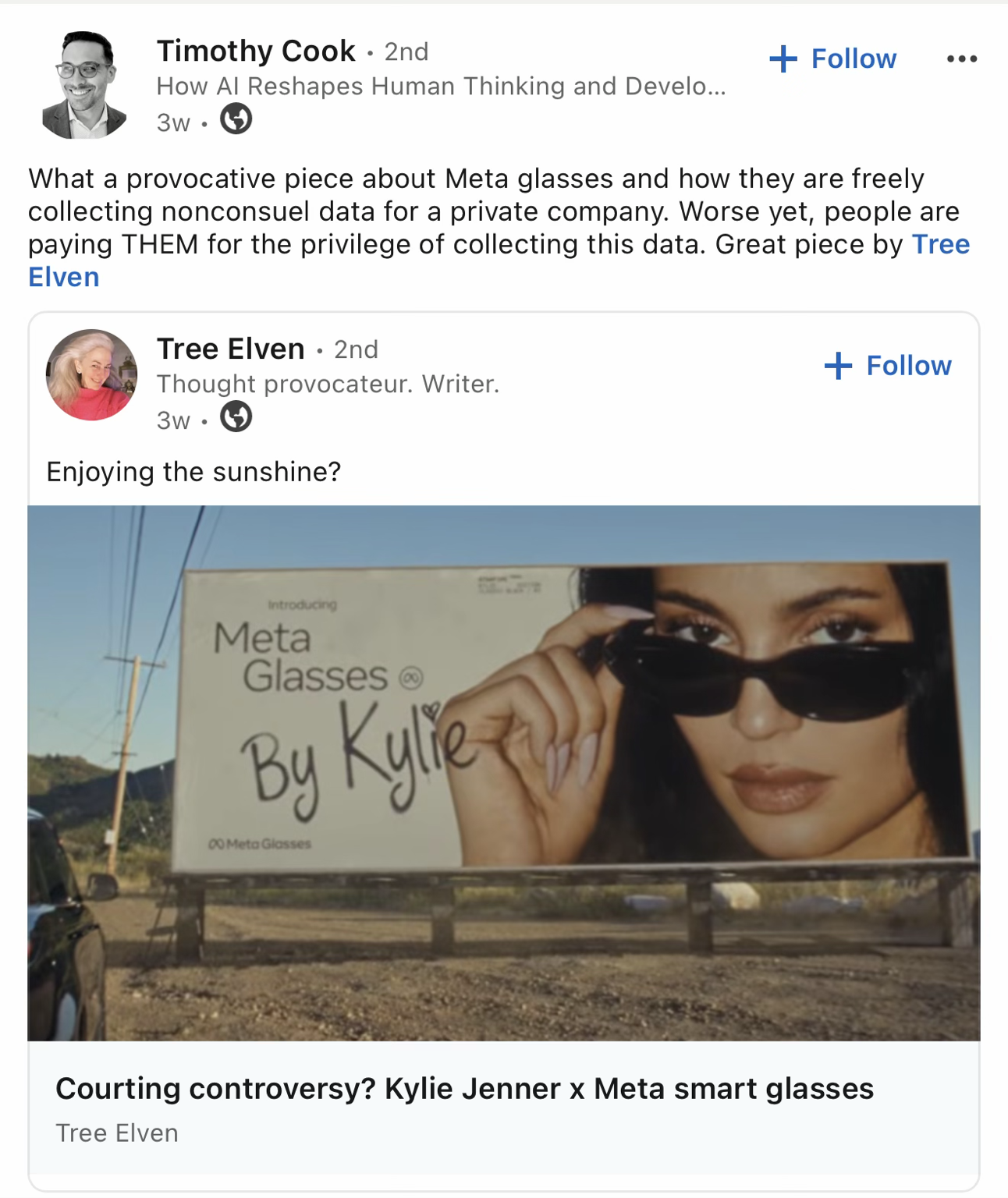
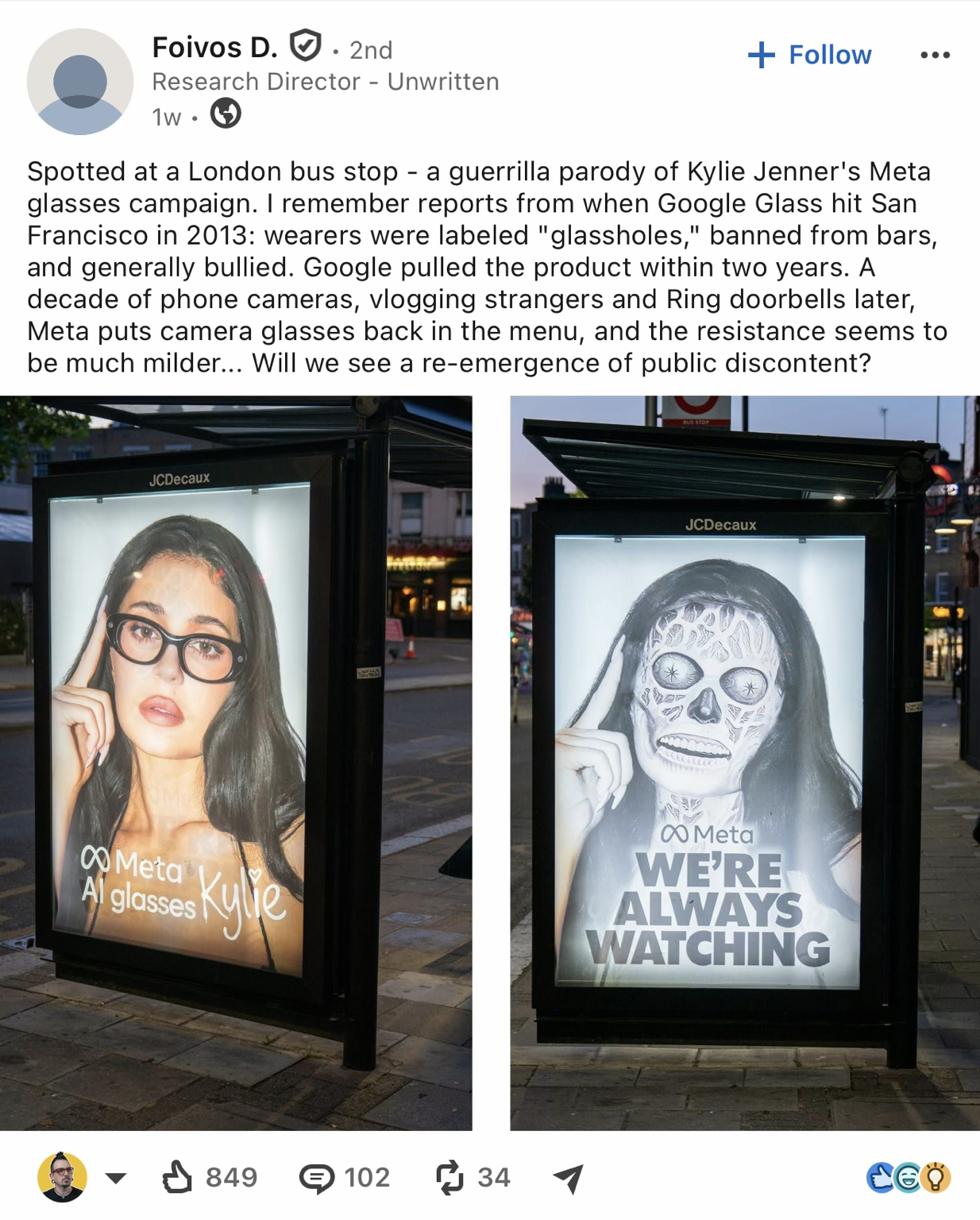
It would also be a mistake to treat this as a Meta-only argument, because Meta won’t own this category forever, although they are the ones that will be remembered for the bad press.
Google and Samsung have already shown intelligent eyewear being developed with established glasses brands including Warby Parker and Gentle Monster. These products are being designed around many of the same ideas: cameras, microphones, open-ear audio, live translation and an AI assistant that can understand what the wearer is looking at. They are expected to begin reaching customers later this year.
Apple is widely reported to be developing its own answer to the Ray-Ban Meta glasses, potentially for release in 2027. Nothing has been officially announced, so the details should be treated as reporting rather than fact, but the expected direction is familiar: cameras, speakers, microphones, Siri and Apple Intelligence, all connected closely to the iPhone. Reports also suggest Apple may use privacy as one of the main ways it distinguishes its glasses from Meta’s.
Then there are products from Snap, XREAL and smaller manufacturers, covering everything from discreet AI assistants to glasses with displays built into the lenses.
In other words, banning or stigmatising one pair of Ray-Bans doesn’t resolve the question. It postpones it until the same capabilities arrive inside another familiar-looking frame with a different logo on the side.
We need to decide what responsible wearable technology looks like before every large technology company has its own version on the shelves. That means rules based on recording, processing, identification and location, rather than rules written around whichever manufacturer happens to be attracting headlines this month.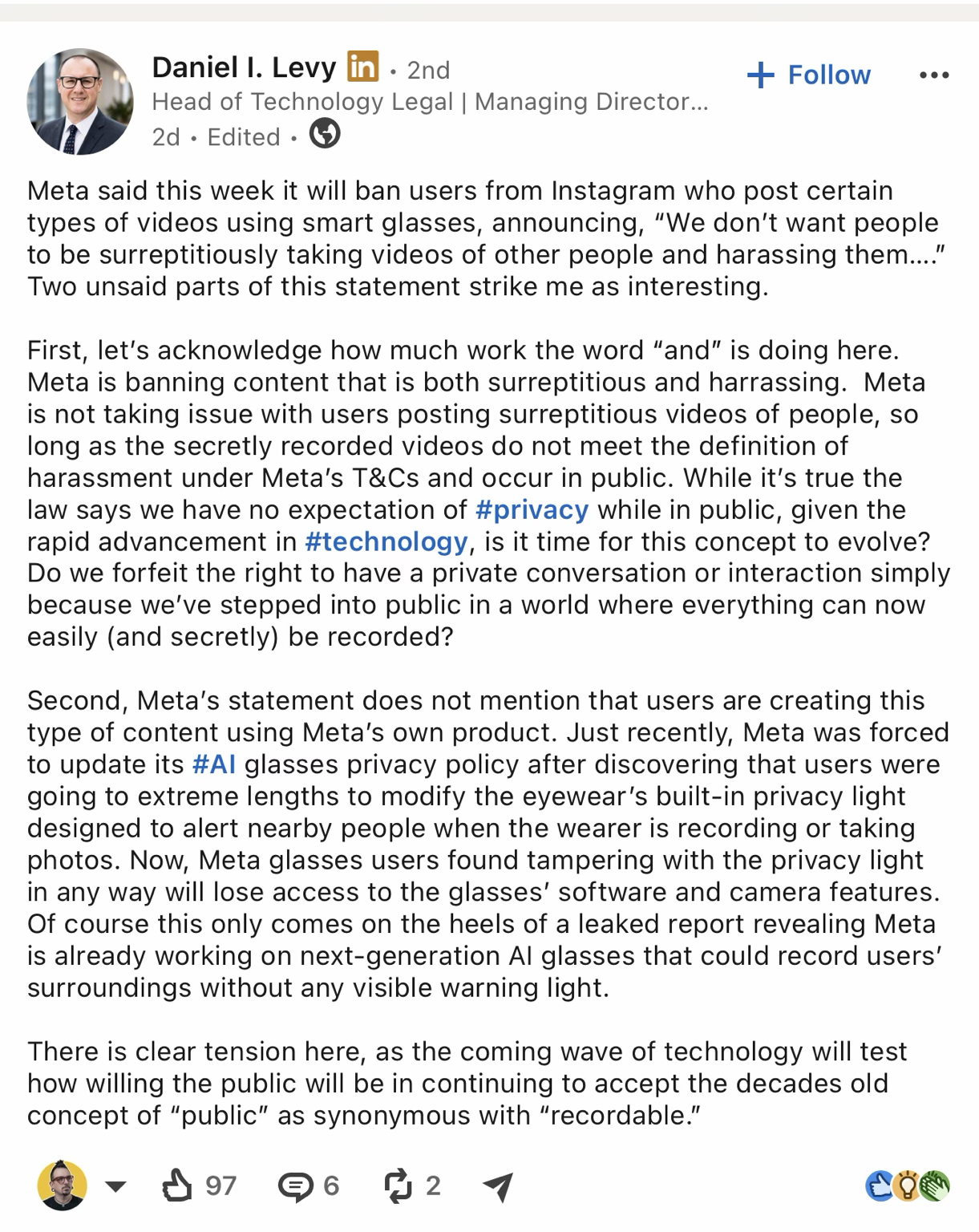
The objection I can’t wave away
The strongest argument against me is facial recognition.
The New York Times reported that Meta has been considering adding this feature to the glasses. Refuge and Women’s Aid told The Independent that abusers would use it, that it could put survivors directly in harm’s way, and that it threatens the safety of women and girls in public generally. Those are two organisations that spend every day with women fleeing violent men. When they tell me how violent men will use a feature, I’m not going to argue with them about their own field.
My honest answer is that a phone already does most of this. Reverse image search has been free for a decade. Anybody determined to identify a stranger has had the tools for years, and the those who stalk their ex-partners are already doing it with social media, mutual friends and public electoral rolls.
But I won’t pretend the two are identical, because the difference is friction. Raising a phone to somebody’s face is a visible act that other people can see and challenge. Glasses remove that moment. Friction is a safeguard, and a company that designs it out should have to stand up and defend the decision in public.
So we must challenge Meta on it. Loudly. Meta is setting precedents here, whether it deserves that responsibility or not, and the decisions it makes will influence what people accept from Samsung, Google, Apple and whichever manufacturer follows them.
Apple may decide that privacy is the feature that separates its glasses from Meta’s. Google and Samsung may build different safeguards into Android XR. That competition could improve the category, but only if customers, regulators and campaigners make privacy part of the buying decision rather than something companies add after the damage has been done.
Rules that deal with the actual risk
Some places should restrict recording-capable glasses and I’d happily take mine off without a word of complaint.
Toilets, changing rooms, saunas, pool areas, medical settings and spaces used by children are the obvious ones. Potsdam has added smart glasses to the existing ban on photography in its swimming pools and saunas, and public pools in Baden-Württemberg are moving the same way. Royal Caribbean restricts them in public toilets, youth areas, medical spaces and the casino. The College Board banned them in SAT exams over cheating.
Royal Caribbean has handled this well. Guests are told they can bring the glasses aboard and wear them in unrestricted areas, and anyone whose smart glasses carry a prescription is advised to pack a backup pair that isn’t smart. That’s a targeted rule that understands prescription lenses aren’t optional.
A targeted restriction says recording creates an unacceptable risk here. A blanket ban says anybody wearing this object is a risk. The second carries a cost that lands on the wrong people. Somebody wearing prescription smart glasses can’t just take them off and carry on with their day. A blind person loses a tool that reads signs and describes rooms. Somebody with limited mobility loses a hands-free control because another abused the same hardware.
We managed this with cars. Licences, speed limits, safer road design, insurance, penalties for dangerous driving. We built the rules around the risk and kept the purpose. We can do the same here. Define the sensitive spaces. Make the capture indicator obvious and hard to defeat. Disable the camera when it’s blocked. Give people a fast route to report abusive content. Strip the money out of humiliation videos. Protect access for people using this as an assistive device.
Who pays for the panic?
Banning the newest device looks like action. The offender switches to a phone, a smaller hidden camera or whatever turns up next year. The intent outlives the policy while everybody else carries the restriction.
That’s the part that bothers me most. The individual who behaved appallingly usually loses very little. The blind user loses their assistance. The person with limited mobility loses their hands-free control. The rest of us put the glasses back in the case, and society gets a bit more suspicious of everyone.
I own one of the most useful pieces of technology I’ve bought in years and yet, I hardly wear it. The battery works, the camera works, the AI is useful, my prescription’s in the lenses and the frames fit my life better than another screen ever could. I leave them at home now because I know what a stranger might assume when they see a camera on the face of a man they don’t know.
That makes me angry. And this anger belongs with the men who filmed women without asking, the creators who packaged humiliation as entertainment, the platforms that paid them for it and the audience that kept watching. They’ve handed their reputation to every decent wearer and walked away.
If Ellie walked into a coffee shop tomorrow wearing Meta glasses, I doubt anyone would look twice. If I walked into the same coffee shop wearing the same pair, I think the room would read me differently. Same frames. Same camera, same microphones, same AI. The only thing that’s changed is the person wearing them.
So here’s what I want, and it’s got very little to do with hardware:
I want society to feel able to go after those men. I want the woman who reports one to be believed, supported and told what happened next. I want platforms to lose them their audience and their income within days. I want venues, police and lawmakers to treat covert filming as the offence it is, instead of shrugging and waiting for the manufacturer to issue a firmware update.
Every restriction has a cost and we should be honest about who pays it. At the moment, the cost lands with everybody except the people who caused it.
Technology can extend what a person can do. It can give somebody a new way to communicate, remember, navigate or understand what’s in front of them. It can also extend their ability to cause harm. The direction comes from the human wearing it.
I want to be able to film a bike ride, identify a fish, listen to a podcast and message Ellie while my phone stays in my pocket. I want blind people reading menus and calling somebody who can describe the room. I want two people speaking different languages looking at each other while the technology handles the rest.
I also want the woman sitting opposite me to feel safe. Those things can coexist, and they need boundaries, safeguards, decent manners and real consequences.
So yes, I understand the look.
The fear has human authors, and human accountability is how we fix it.
What the discussion added
After reading and replying to the comments, I came away thinking that smart glasses are almost secondary to the argument they have triggered.
The strongest reactions were about trust, control and who carries the consequences when technology is misused. Some people simply don’t trust Meta and may never trust anything the company produces. Others are less concerned about the manufacturer and more worried about the person standing opposite them with a camera on their face. Both positions shape how these products will be accepted, regardless of what the technical specifications or privacy pages say.
The accessibility comments gave the conversation a different weight. One contributor explained that he cannot operate a smartphone conventionally, yet his glasses allowed him to make a completely hands-free WhatsApp video call whilst out in London. Another described the potential for older people to remain independent at home using voice-led technology that removes screens and complexity. Those uses become easy to overlook when the entire category is discussed through the behaviour of people filming strangers without consent.
There was also a fair challenge around community spaces. A lecturer explained why smart glasses had been prohibited on a course because their presence could change how students interacted with one another, even when nobody was recording. That is a legitimate concern and exactly the kind of setting where clear expectations may be appropriate. It also raised a harder question about exemptions for assistive technology and who gets to decide when a device is essential.
At the other end of the discussion were people who saw the glasses themselves as inherently unethical, regardless of whether they were switched on or how they were being used. I fundamentally disagree with that view, although its existence matters because it shows how far public perception has already moved. A product can be technically compliant and still make the people around it uncomfortable, and manufacturers cannot solve that problem with a slightly brighter LED.
The discussion also reinforced that this category is moving beyond Meta. Samsung, Google, Apple and others are developing their own approaches, with and without cameras, and every one of them will inherit some of the suspicion created around the products already on the market. Public perception is rarely precise enough to distinguish between different hardware, privacy models or capabilities when the objects all look broadly similar.
That leaves us with a more difficult job than deciding whether smart glasses are good or bad. We need rules that recognise sensitive spaces, consequences that follow the people who misuse the technology and protections that don’t remove independence from those using it as an assistive tool. Manufacturers need to earn trust through the way their products behave, the controls they provide and the clarity with which they explain what happens to people’s data.
The comments didn’t produce a version where everybody wins, and I don’t think one exists. Privacy, accessibility, personal freedom and collective comfort will occasionally pull in different directions. The best we can do is understand the cost of each decision and make sure it doesn’t keep landing on the people who caused none of the harm.
You can read the original LinkedIn discussion and add your own perspective here:
Read and join the discussion on LinkedIn
The article began on a sun lounger as an attempt to correct a few misconceptions about a pair of glasses. The conversation that followed showed that the real subject was trust, and that discussion is only getting started.
Sources
-
Meta, “Meta’s AI Glasses: Your Questions Answered” (July 2026): about.fb.com/news/2026…
-
Capture LED tamper update, 7 July 2026: 9to5google.com/2026/07/0…
-
Ray-Ban Meta Gen 2 specifications and 3-minute video: m.gsmarena.com/meta_rayb…
-
Gen 2 video upgrade from the original 30-second clips: www.phonearena.com/news/Meta…
-
Instagram removing harassment videos filmed on the glasses: thenextweb.com/news/inst…
-
Account deactivations and Mosseri’s comments: petapixel.com/2026/07/2…
-
Svenska Dagbladet and Göteborgs-Posten investigation into Sama: www.helpnetsecurity.com/2026/03/0…
-
ICO writing to Meta: www.aol.com/articles/…
-
Class action and disputed face blurring: www.ibtimes.co.uk/meta-laws…
-
Facial recognition plans, Refuge and Women’s Aid response: www.aol.com/news/meta…
-
Potsdam pool and sauna ban, Royal Caribbean, College Board: www.thelocal.de/20260607/…
-
Infratest Dimap poll and Baden-Württemberg pools: www.teltarif.de/en/smarte…
-
Royal Caribbean policy including prescription backup advice: www.paxnews.com/news/crui…